 This is a picture of Booker T. Washington in his office at Tuskegee. This picture resembles many things about Washington's personality and morals. First of all his office is really clean, he always talked about cleanliness being really important and something that was necessary in order to be taken seriously. It also shows Washington non-stop work ethic that drove him to be so successful and influential in promoting change in society. The book case in the back of the room full of books shows that hes educated and always reading and learning new things. Washington was a non- stop advocate of industrial education, but also of bettering yourself through being more professional in every aspect and it is truly shown in this picture. The dead flowers are kind of ironic though, i don't really know how i feel about them. It's Ironic in the fact that this picture depicts change for the better but then there's dead flowers, I find it rather odd.
Tuesday, November 30, 2010
This is a picture of Booker T. Washington in his office at Tuskegee. This picture resembles many things about Washington's personality and morals. First of all his office is really clean, he always talked about cleanliness being really important and something that was necessary in order to be taken seriously. It also shows Washington non-stop work ethic that drove him to be so successful and influential in promoting change in society. The book case in the back of the room full of books shows that hes educated and always reading and learning new things. Washington was a non- stop advocate of industrial education, but also of bettering yourself through being more professional in every aspect and it is truly shown in this picture. The dead flowers are kind of ironic though, i don't really know how i feel about them. It's Ironic in the fact that this picture depicts change for the better but then there's dead flowers, I find it rather odd.

Letter to Washington
 To the right is a letter that W.E.B Du Bois wrote to Booker T. Washington, congratulating him on his speech in Atlanta. I find this interesting since we have been discussing how Du Bois challenged Washington's opinions on African American advancement. While Washington believed that African Americans should concentrate on social and economic improvement(assuming political rights would follow), Du Bois had the opposite idea. Both Washington and Du Bois had the same goal in trying to advance African Americans. Setting their differences aside, I find it honorable that rivals can still congratulate each other on their accomplishments, even though they may disagree.
(Let me heartily congratulate you on your phenomenal success at Atlanta-it was a word fitly spoken.)
Sunday, November 28, 2010


After learning about The Tuskegee Institute that Booker T. Washington built from the ground up, I wanted to look into it further. I came upon this photo of the students of Tuskegee constructing on of the buildings, I found this interesting because this is what I based my paper about Washington on. The fact that Washington incorporated this kind of education into the lessons he provided at the Institute was very impactful. Not only did the students that graduated from this school come out with book smarts but they left the Institute with many other strong characteristics that would benefit them in life. The very act of making bricks and constructing the building of the institute instilled a sense of pride and accomplishment into these men. Also, through this Washington's students learned to respect. I believe that by teaching these intangibles Washington made these students better people.
Thursday, November 25, 2010
Tuskegee Airmen
 After talking about Tuskgee and having the presentations about the institute I just thought i'd highlight one of the famous sets of African Americans associated with the school. The Tuskegee airmen were a group of pilots during WW2 that were highly respected. Jim Crow laws were still in use, thus African Americans, even those fighting were segregated. The tuskegee airmen were the first African American pilots. They were incharge of guarding other planes, like bomber planes. Before long their reputation made them quite popular. They made strides for their people disproving the idea that African Americans were less intelligent or able bodied. This also, to me, proves another point. Washingtons system worked. It allowed people to slowly prove their self worth. The education they recieved at Tusgekee empowered students. It helped them to succeed, giving them both a positive attitute and a set of skills. Overall I think this is a perfect example of how Du Bois was perhaps a little too critical of Washtingons idea of an education. The students of Tuskegee were helping gain their peoples rights, and it offered them a source of a pride not just a key to money.
Slavery Today
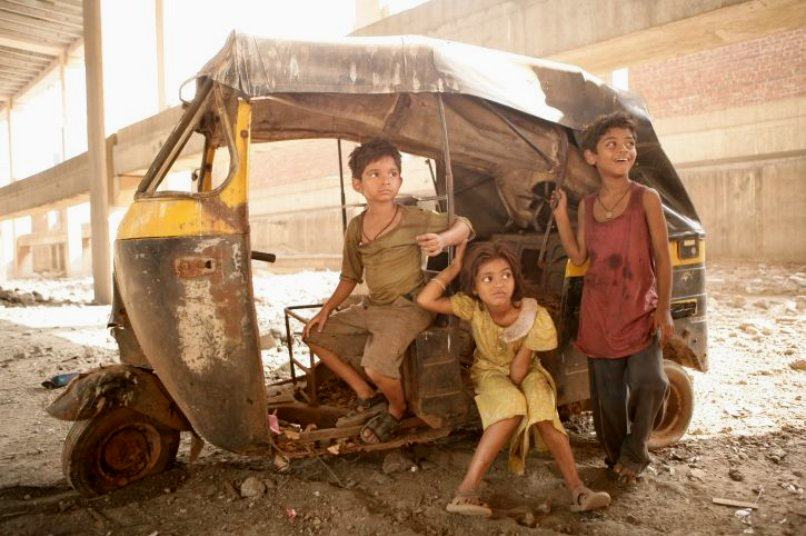 Being a global studies major I like to link things to present day conflicts. Also, being who I am, I link most things to pop culture in some way or another. I suppose in some way it helps me to better understand concepts.Hence after our class meeting on Thursday, I realized Slumdog Millionare was a perfect example of child slavery. For those of you who havent seen the movie the main character is taken as an oraphan to a camp where children from the slums are kept and taught to sing. Only to realize they're future was to be PURPOSELY blinded and forced to sing on the side of the road for money (none of which they'd keep). Talking about blind singers, and beggers made me think of this movie (a picture of which is the one to the right). It's a painful reminder today that these conditions still exsist. Yes this is just a movie, but its painfully realistic for the slums of third world countires. After all who would miss orphan children whose exsistance is barely recognized as is? If were obvlious to problems we cant help. Just as previously mentioned we unknowningly power the inhumane practice of human trafficking. So be aware of these problems. If you can buy from companies that advertise fair wages (like with diamonds and coffee beans).
Monday, November 22, 2010
Honoring W.E.B. Du Bois


Du Bois was recently honored for his numerous contributions throughout his life. Du Bois was born and raised in Great Barrington, Massachusetts. Due to the controversy surrounding Du Bois' later years in life, citizens of Great Barrington have been reluctant to erect monuments in memory of Du Bois. Until recently, the only display honoring Du Bois' contributions was a park that was dedicated shortly after his death. Not surprisingly, most of the uproar surrounding the proposed displays honoring Du Bois were initiated by the older population of Great Barrington. Inevitably, population shifts occur, and an older group of citizens is replaced with a younger, more open-minded generation. With that, as of the last decade, the citizens of Great Barrington have honored Du Bois by: erecting multiple monuments, painting several murals, posting signs at the entrances of their town alerting passer-by's of his birthplace, and have built the official Du Bois center. As quoted from a citizen of Great Barrington. "He's everywhere in Great Barrington, I'm kind of comfortable where things are now. The resistance is not there anymore." Great Barrington will be celebrating its 250th birthday soon, so citizens there are in the process of putting the final touches on items honoring Du Bois. The painting above is a mural on the side of a building in Great Barrington depicting the life and achievements of Du Bois. Next to the tree within the painting is a quote from a Reverend that states, "Du Bois' legacy is beneficial to all those who seek freedom and justice."
Sunday, November 21, 2010
Two-ness

This schizophrenic painting by placid Anemia can represent the two-ness that W.E.B. Du Bois describes in his book. He writes, “an American, a Negro; two souls, two thoughts, two unreconciled striving; two warring ideals in one dark body, whose dogged strength alone keeps it from it from being torn asunder.” The man on the right is different from the man on the left; he is represented as subordinate than the man represented on the left. Do Bois state’s that African American’s saw themselves through other people’s eyes rather then their own.
Subscribe to:
Posts (Atom)